A child's first encounter with emojis is an exciting moment, much like learning a secret code. To make it interesting and beneficial, it's worth starting with a game where emojis become living characters.
For a child, emojis are not just "pictures"; they are a bridge between play and learning. Most children perceive them with great enthusiasm. They begin to understand images much earlier than letters. Emojis allow a child who cannot yet read to "read" a story independently. This gives a sense of success: "I understood what this is about all by myself!"
In today's world, the ability to decode visual information is very important. When a child sees a symbol, their brain works more intensely:
Analysis: "Is this 🏰 a castle or a palace?"
Context: "If a princess lives there, then it's a castle."
The child learns to choose the right words for the same symbol.
It can be difficult for toddlers to express what they feel in words. Emojis help them identify the characters' emotions:
😱 — "Oh, he's scared!"
✨ — "Wow, magic is about to happen!" This makes empathy for cartoon characters much stronger.
How to play?
- Open a fairy tale in the "Secret Code — Emoji" section.
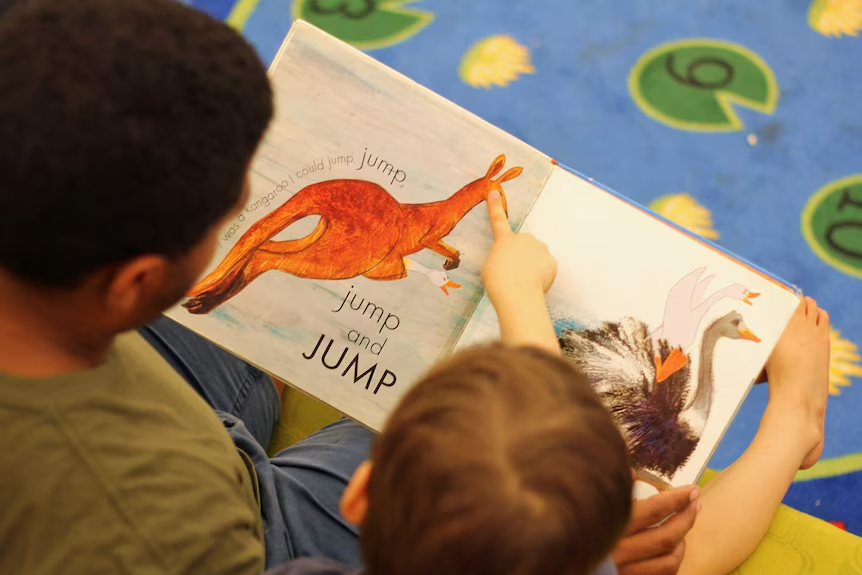
- Read the text together: the adult reads the words, and the child "decodes" the picture.
- Try to guess the word by its grammatical case: is it a "guitar" 🎸 or a "guitarist"?
The first mission is already waiting! Follow the link [link name] and solve the mystery of the Land of the Dead together with Miguel. 💀🎸🌟 As a bonus, there is a hint-glossary at the end of each fairy tale.
Don't just read — play the fairy tale!