Our website features a wide selection of fairy tales created based on popular animated films. These characters are ideally suited for “learning through identification,” as their images are already visually familiar to children, which makes the process of internal emotional engagement with the story easier.
Here is a selection of the bravest and most positive characters whose stories can be found on the platform:
1. Skye and Ryder (“PAW Patrol”)
These characters are a model of responsibility and mutual support.
• Why they matter: They teach children that fear is normal, but true courage lies in taking action to help and save others.
• Identification effect: The child tries on the role of a “rescuer,” which builds self-confidence and a willingness to help others.
2. Lightning McQueen (“Cars”)
McQueen’s story is a journey from selfishness to true nobility.
• Why he matters: McQueen shows that true victory is not just about winning a trophy, but about loyal friendship and respect for one’s opponent.
• Identification effect: Living through his experience helps children understand the value of teamwork and learn how to lose and win with dignity.
3. Simba (“The Lion King”)
One of the most powerful archetypes of growth and accepting responsibility.
• Why he matters: Simba overcomes great loss and guilt, finding the strength to return and protect his home.
• Identification effect: Through emotionally experiencing Simba’s story, children learn to overcome life’s challenges and understand their place in the family and the world.
4. Moana (“Moana”)
A heroine who embodies resilience of spirit and faithfulness to her calling.
• Why she matters: Moana is not afraid to go against the rules for a higher purpose—the salvation of her people. She teaches children to listen to their hearts.
• Identification effect: Helps girls (and boys) develop leadership qualities and trust in their own intuition.
5. “The Lion King” (The Lion King)
• Hero: Simba.
• Why it is beneficial: Living through the journey from a frightened lion cub to a confident king. Teaches acceptance of one’s past and the value of courage.
6. “Cars” (Cars)
• Hero: Lightning McQueen.
• Why it is beneficial: The transformation of a selfish racer into a true friend. Teaches that helping others is more important than winning a trophy.
7. “Frozen” (Frozen)
• Heroines: Anna and Elsa.
• Why it is beneficial: Anna demonstrates extraordinary courage based on love for her sister rather than superpowers.
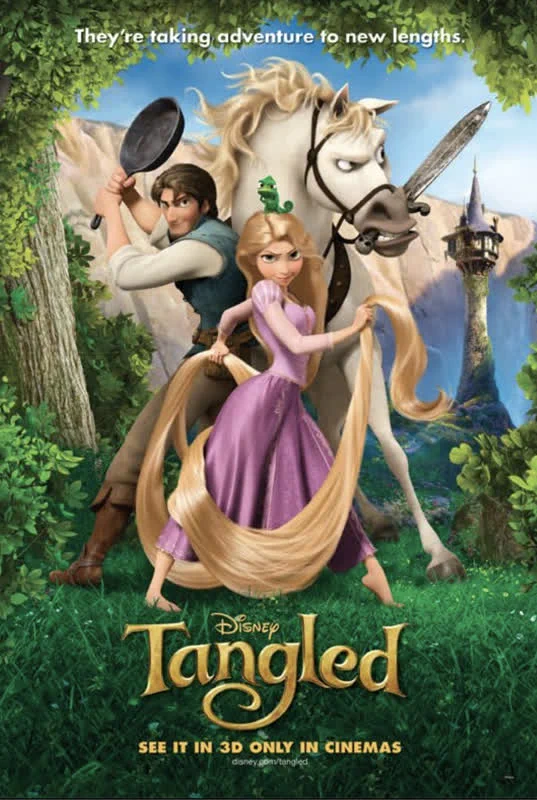
8. “Tangled” (Tangled)
• Heroine: Rapunzel.
• Why it is beneficial: Teaches children to step out of their “comfort zone” (the tower) and explore the world despite their fears.
9. “Finding Nemo” (Finding Nemo)
• Heroes: Marlin and Dory.
• Why it is beneficial: A story about overcoming anxiety. Marlin learns to trust the world, while Dory teaches the principle of “just keep swimming,” a powerful pattern of resilience.
10. “Toy Story” (Toy Story)
• Hero: Woody.
• Why it is beneficial: Teaches loyalty, leadership, and how to accept changes in life (the arrival of new friends or new circumstances).
11. “The Incredibles” (The Incredibles)
• Heroes: The Parr family.
• Why it is beneficial: Helps children identify their own “superpowers” (talents) and understand the importance of family support.
12. “How to Train Your Dragon” (How to Train Your Dragon)
• Hero: Hiccup.
• Why it is beneficial: The best example that courage is not about physical strength, but about intelligence and kindness. Teaches peaceful conflict resolution.
How can this effect be strengthened?
To make learning through identification even deeper, after reading a fairy tale on the website, it is helpful to ask the child:
• “Which character would you like to be like and why?”
• “What did you feel when the character got into trouble?”
• “What would you do in the place of the main character?”
Each of these fairy tales on the website is accompanied by illustrations that allow children to visually identify themselves with the hero. While reading, the child’s brain “records” these positive scenarios (patterns), and in real life, when courage is needed, the child can subconsciously draw on the experience of Simba, Moana, or Ryder.
In the next article, we will talk about how our website can help even the shyest child start speaking more confidently.